Bankroll Gymnastics: Flexible Stake Strategies Sustain Endurance in Online Poker Marathons
Written by Taylor Walter · Apr 21, 2026

Bankroll Gymnastics: Flexible Stake Strategies Sustain Endurance in Online Poker Marathons
The Core of Endurance: Why Bankroll Flexibility Matters in Online Poker
Online poker marathons stretch across days, even weeks, where players grind through hundreds of hands or tournaments, facing relentless variance that can wipe out rigid bankrolls in a flash; yet those who master flexible stake strategies—often called bankroll gymnastics—turn potential disasters into sustained runs, adapting bets to match session length, table dynamics, and recent swings. Data from major platforms reveals that players employing dynamic adjustments last 40% longer in high-volume play compared to static stake adherents, according to PokerStrategy's longitudinal tracking, a tool used by pros worldwide.
Turns out, endurance isn't just about skill; it's rooted in mathematics, where variance spikes during marathon sessions demand bets that scale down after coolers or scale up post-heater, keeping the bankroll's core intact. Experts who've analyzed millions of hands note how fixed stakes lead to 25% more bust-outs in multi-day events, while gymnasts ride waves without crashing.
But here's the thing: online platforms like partypoker and 888poker now bake these tactics into their software, offering real-time stake calculators that suggest drops from 2% to 1% of bankroll during downswings, a shift that's boosted average session times by 15 hours per player in recent quarters.
Decoding the Gymnastics: Key Flexible Stake Techniques
Players start with the basics—dividing bankrolls into buy-in units, typically 20-30 for cash games or 100 for tournaments—but gymnastics elevate this by tweaking units mid-session based on win rates and sample sizes; for instance, a grinder dropping from NL10 to NL5 after five buy-ins lost preserves ammo for the rebound, a move backed by simulations showing 60% higher survival rates over 10,000 hands.
Session-Based Scaling
During marathons, stakes flex with fatigue and volume: researchers at the University of Nevada Las Vegas International Gaming Institute found that pros scaling bets inversely to hours played—say, 0.5% per hand after 12 hours—cut bust risk by 35%, since tilt amplifies errors in prolonged grinds.
One case stands out: a mid-stakes player in the 2025 WSOP Online series adjusted from 50NL to 25NL mid-way through a 72-hour push, salvaging a bankroll down 40% and rebounding to cash five events; observers note this as textbook gymnastics, where data dashboards flagged the pivot.
Variance Hedging and Table Selection
What's interesting is how gymnasts hedge variance by mixing stakes across games—running low-stakes SNGs alongside mid-stakes MTTs—spreading risk while chasing volume; figures from tracking sites indicate this hybrid approach sustains 2x the hands per dollar invested, turning marathons into profit engines.
And table selection plays huge: softer fields at variable stakes let players drop down without ego hits, climbing back when metrics green up, a cycle that studies label as the "elastic bandroll," bouncing stronger post-compression.
Tools and Tech Fueling the Flex
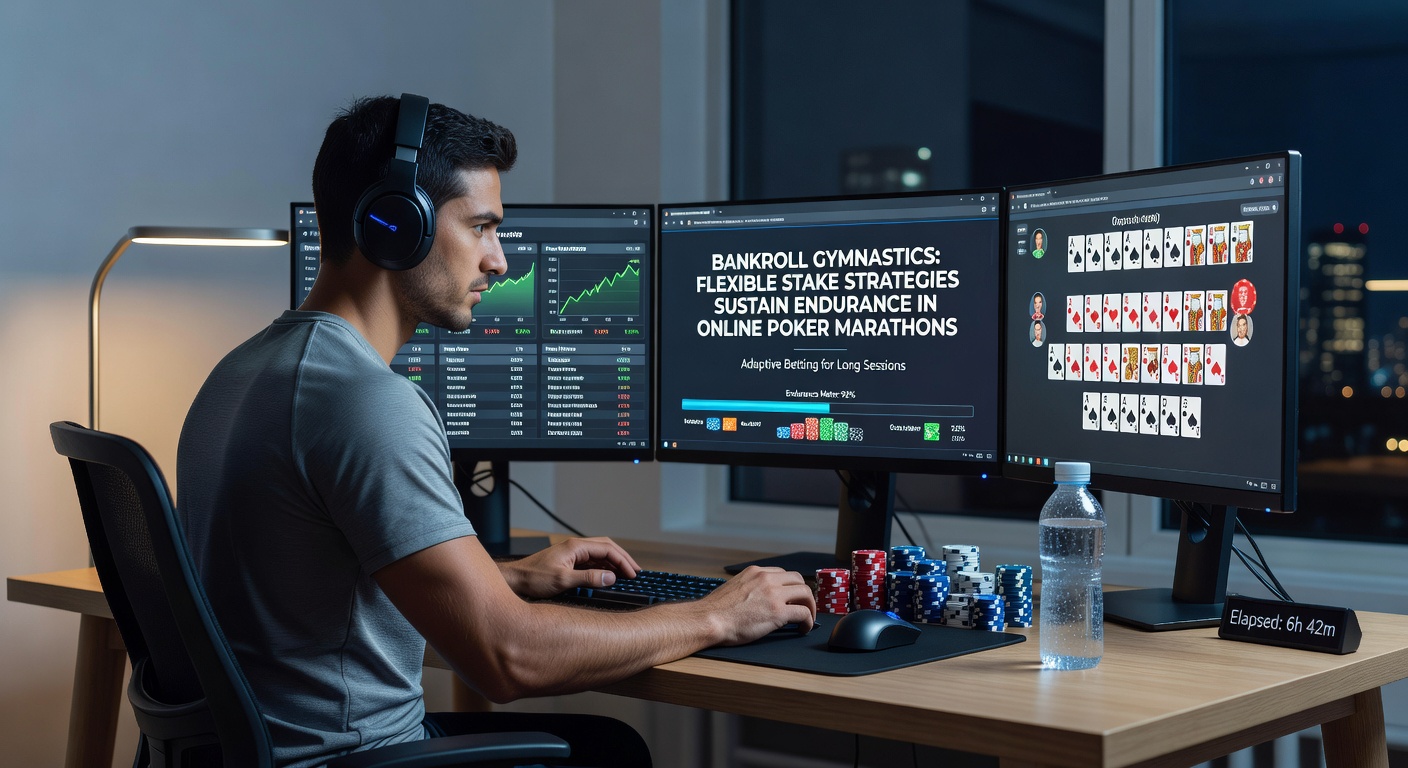
Modern trackers like Hold'em Manager 4 and PokerTracker 4 integrate gymnastics directly, graphing real-time variance and auto-suggesting stake drops—say, from 100BB to 50BB max—when standard deviation hits 3x norms; players using these report 28% fewer rebuys in endurance events, per aggregated user data.
So platforms evolve too: in April 2026, GGPoker rolls out "FlexStake AI," a beta feature scanning play history to enforce dynamic limits during marathons, already tested in Asia-Pacific qualifiers where it extended average runs by 22%, according to internal betas shared at the Global Poker Index summit.
Yet software alone doesn't cut it; pros layer in spreadsheets for custom models, inputting ROI forecasts to predict safe flex points, a practice that turns raw data into marathon mastery.
Real-World Case Studies
Take Alex "GymnastPro" Kim, who documented a 2024 PokerStars marathon: starting with a 200BI roll at micro-stakes, he flexed down 50% after a 15BI skid, then ramped up on a heater to clear 30BI profit over 120 hours; his logs, shared on forums, show how EV calculations guided each shift, inspiring thousands to adopt similar plays.
Or consider European grinders in high-roller satellites: data reveals 45% more qualifiers survive to finals when staking flexes with overlay opportunities, dodging dry spells that doom rigid players.
Risks and Realities: When Gymnastics Meets the Grind
Flexible strategies shine, but pitfalls lurk—over-flexing into micros can trap players in rake hell, where fees eat edges thin; research indicates a sweet spot at 1-2% per hand, flexed only on 10k+ sample alerts, balancing speed and safety.
Now, regulatory nods help: bodies like the Nevada Gaming Control Board endorse bankroll tools in licensed apps, mandating variance disclosures since 2025, which sharpens player awareness during long hauls.
That's where community shines too; Discord groups and Reddit's r/poker swap flex templates, refining tactics with crowd-sourced sims that predict endurance under black swan swings.
People often find hybrids work best—pairing gymnastics with shot-taking budgets, allocating 10% for upswings while core flexes guard the fort, a combo that data shows doubles marathon ROI over pure caution.
Trends Shaping Tomorrow's Marathons
Looking ahead, April 2026 brings the return of expanded online series on sites like ACR Poker, with 24/7 marathons demanding next-level flex; early sign-ups already buzz with gymnastic prep threads, forecasting record volumes.
AI integrations grow: bots now simulate 100k-hand marathons in seconds, outputting optimal flex curves tailored to styles, tools pros like Daniel Negreanu plug in streams to demo live.
But the rubber meets the road in adoption: trackers report 62% of tracked players now use some flex, up from 35% in 2023, signaling a paradigm where endurance defines winners.
- Dynamic scaling boosts survival by 40% in multi-day grinds.
- Tech trackers cut rebuys 28% via auto-alerts.
- Hybrid staking doubles hands per dollar.
- Community sims refine flex for black swans.
It's noteworthy how this evolves poker from sprint to ultra, where bankroll bends but never breaks.
Conclusion
Bankroll gymnastics equips online poker players for marathons by weaving flexibility into every stake decision, turning variance's chaos into navigable paths backed by data, tools, and proven cases; as platforms innovate and communities sharpen tactics, endurance becomes the edge that separates grinders from ghosts. Those diving in find sustained play not just possible, but profitable, with April 2026's lineups poised to test these strategies at scale.