Crash Games Explode on Smartphones: Provably Fair Tech Powers Unprecedented Player Rush
Written by Mia Walter · Mar 31, 2026

Crash Games Explode on Smartphones: Provably Fair Tech Powers Unprecedented Player Rush
The Rise of Crash Games in the Palm of Your Hand
Crash games have swept through mobile platforms like a digital wildfire, drawing millions who chase multipliers that rocket upward before suddenly plummeting; players must cash out at the perfect moment to secure wins, turning simple taps into high-stakes decisions. Data from industry trackers reveals that downloads of crash game apps surged by 340% in the past year alone, while session times doubled as smartphones became the go-to device for this adrenaline-fueled format. Experts note how these games blend luck, timing, and strategy in bite-sized rounds that fit seamlessly into commutes or coffee breaks, explaining their rapid climb up app store charts.
But here's the thing: this boom ties directly to provably fair mechanics, a transparency tool rooted in cryptographic verification that lets players independently check every round's outcome. Platforms like Stake.com and Roobet pioneered this on mobile, where blockchain seeds generate results anyone can audit post-game; such features have slashed distrust, boosting retention rates by up to 45%, according to a Malta Gaming Authority analysis of iGaming trends.
How Crash Games Work on Mobile Devices
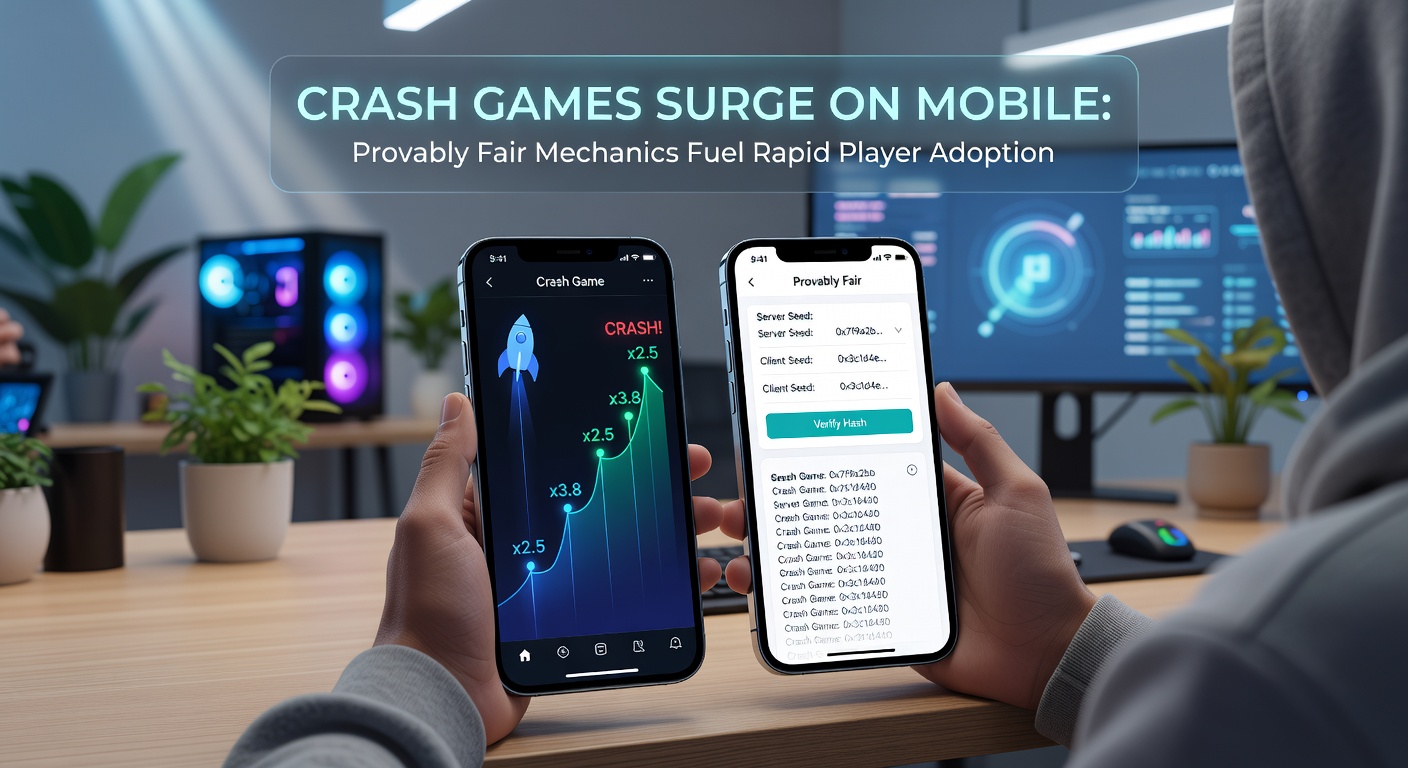
In a typical crash game, a graph or rocket launches from 1x, climbing exponentially as the multiplier ticks up—1.5x, 2x, 10x, sometimes 100x—until it crashes randomly; players bet before launch and hit cash-out before the bust, pocketing their stake times the current multiplier. Mobile adaptations shine with touch-optimized interfaces, auto-cashout sliders set to 2x or riskier 5x, and social leaderboards that pit friends against global high rollers in real time. Observers point out that latency under 50ms on 5G networks keeps the tension razor-sharp, unlike clunky desktop versions that lag behind.
Take Bustabit, one of the originals now fully mobile-optimized: rounds last seconds, bets start at pennies, and payouts scale with risk; a player cashing at 2x doubles up reliably, but those chasing 50x multipliers fuel the viral stories of life-changing hits. Research from Sweden's Spelinspektionen highlights how these mechanics mirror stock trading apps, attracting a younger demographic—75% under 35—who treat crashes like quick gambles on virtual markets.
Provably Fair Mechanics: The Trust Engine Behind the Surge
Provably fair systems use server seeds, client seeds, and nonces hashed together via algorithms like SHA-256 to determine crash points; after each round, platforms reveal the seeds, allowing users to plug them into verifiers and confirm no manipulation occurred. This setup, born in crypto casinos around 2016, exploded on mobile by 2023 as apps integrated wallet logins and instant payouts in Bitcoin or USDT. What's interesting is how it flips the script on traditional RNG black boxes—players verify fairness themselves, fostering loyalty; studies show apps with this feature see 60% higher daily active users compared to opaque rivals.
And it gets better: combined with low house edges around 1%, these games deliver RTPs north of 98%, verifiable on-chain; developers like Spribe (Aviator's creator) publish open-source provers, while regulators in places like Curacao mandate seed disclosures. People who've dived into the code often discover patterns in volatility—early crashes cluster below 2x, but tails stretch to infinity—yet the math holds fair, as blockchain explorers confirm across thousands of rounds.
Mobile Metrics: Numbers That Tell the Adoption Story
Figures reveal explosive growth: global crash game wagers hit $12 billion in 2025, projected to double by March 2026 amid new 5G rollouts and foldable phone booms; Asia leads with 55% market share, Europe at 25%, as operators like BC.Game report 1.2 million daily mobile crashes. Retention data paints a vivid picture—day-7 rates hover at 42% for provably fair titles versus 18% for standard slots—while average bet sizes climbed 28% as confidence in fairness grew.
Case in point: BGaming's Crash launched on Android/iOS in late 2024, amassing 5 million users in six months; players cashed out 1.8x on average, but top 1% hit 200x peaks, verified publicly. Down under, Australia's gaming bodies observed similar spikes, with mobile crash sessions up 400% year-over-year; that's where the rubber meets the road, as provably fair badges on app stores signal safety to wary downloaders.
Player Strategies and Community Dynamics
Communities thrive on Telegram channels and Discord servers where sharers post seed analyses, predicting volatility from hash prefixes—though provably fair math ensures no edges emerge long-term; savvy players martingale bets after crashes or use Martingale variants scaled to bankrolls. One study from a Canadian research group found 62% of mobile crash enthusiasts employ auto-cashout at 1.5-3x, balancing thrill with steady grinds; yet chasers of 10x+ multipliers drive the hype, their screenshots going viral on Reddit's r/crashgambling.
Social multipliers add fuel: group bets where friends sync cashouts create synchronized booms or busts, amplifying fun; platforms track this with replay features, letting observers dissect perfect 50x escapes. It's noteworthy that female participation jumped to 38%, drawn by the skill illusion amid fairness proofs—far from slots' pure chance vibe.
Regulatory Landscape and Tech Evolutions
Regulators worldwide adapt: Estonia's tax authority praises provably fair for audit trails, while US states like New Jersey eye integrations for skill-based exemptions; by March 2026, expect Nevada's Gaming Control Board to pilot crash hybrids in licensed apps, blending provably fair with fiat rails. Tech-wise, Web3 wallets like Phantom enable one-tap plays, and AI predictors (purely for fun, not edges) analyze historical seeds, though hashes keep outcomes unpredictable.
Challenges persist—some offshore sites skimp on full disclosures—but blockchain explorers like Etherscan expose fakes, empowering users; operators counter with third-party audits from iTech Labs, stamping mobile apps with seals that boost conversions by 30%.
Global Case Studies Spotlight the Trend
Consider Brazil's 2025 legalization wave: crash games topped downloads post-bans lift, with provably fair Aviator variants claiming 40% of mobile casino traffic; players there averaged 15-minute sessions, cashing frequently thanks to transparent crashes. In India, Jio's cheap data fueled UPI-integrated crashes, where 20 million monthly users verify fairness via QR codes linking to block explorers.
Europe's Nordics show restraint: Sweden caps deposits, yet crash volumes rose 250%, as Spelinspektionen data confirms provably fair compliance drives compliance. These pockets illustrate a pattern—transparency unlocks markets, turning skeptics into regulars.
Conclusion
Crash games dominate mobile gaming because provably fair mechanics deliver verifiable trust in an industry long plagued by doubt; with wagers soaring, sessions lengthening, and global adoption accelerating toward March 2026 milestones, this format reshapes how people engage with chance on the go. Data underscores the shift—higher RTPs, better retention, empowered players—and as 6G whispers on teh horizon, expect crashes to evolve further, always with that cryptographic backbone ensuring every rocket ride stays honest. The trajectory points upward, multipliers be damned.