Cross-Platform Shifts Reveal Player Movement From Classic Reels Toward Live Interactive Casino Experiences
Written by Taylor Krüger · May 17, 2026
Cross-Platform Shifts Reveal Player Movement From Classic Reels Toward Live Interactive Casino Experiences
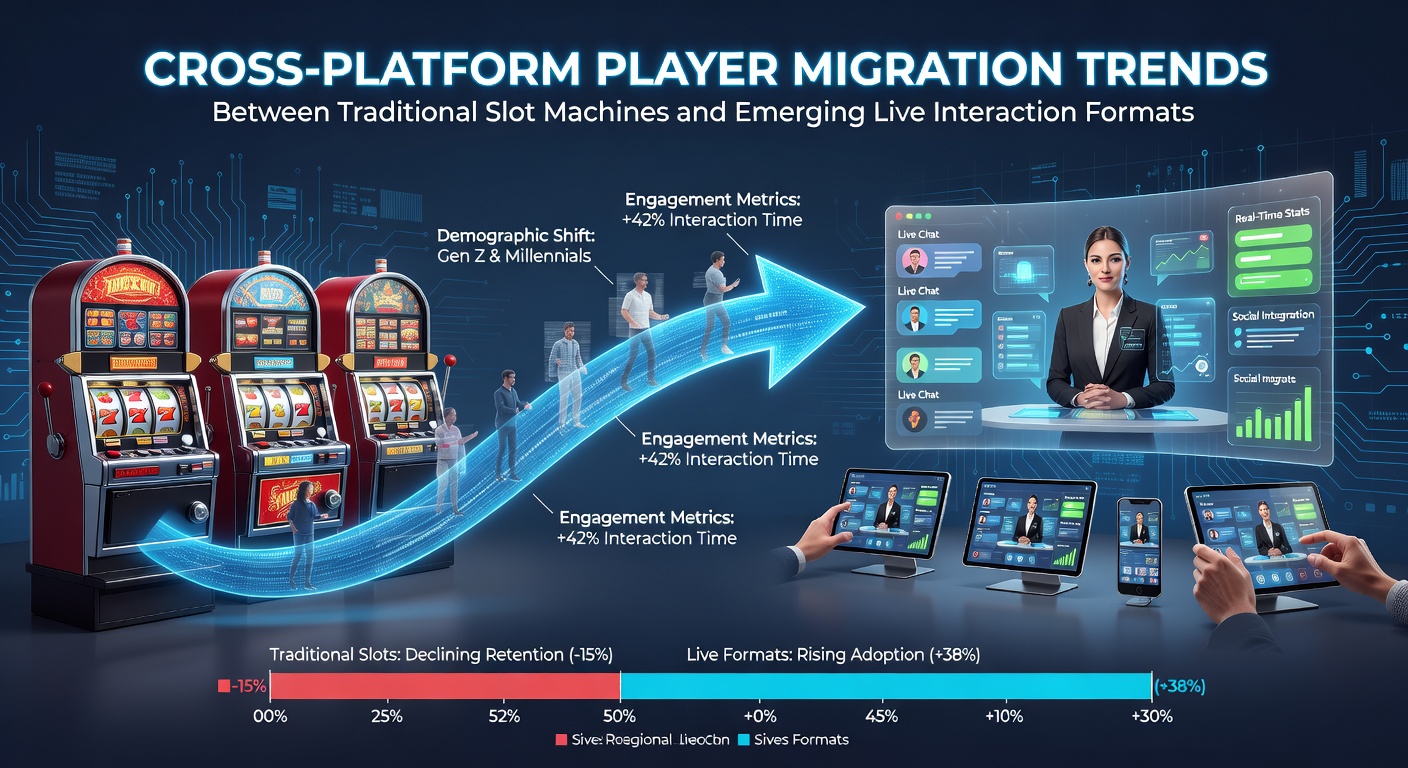
Market analysts track steady movement as players leave traditional slot machines and explore live interaction formats that combine video streams with real-time dealer engagement. Reports compiled through spring 2026 show this pattern accelerating across multiple platforms, particularly as operators integrate mobile apps with live dealer tables that mimic physical casino atmospheres. Data from industry tracking services indicate that sessions on classic three-reel and five-reel slots have declined in several regions while live blackjack, roulette, and game-show style titles gain ground.
Traditional Slot Machine Landscape Holds Steady Yet Faces Pressure
Slot machines continue to generate substantial revenue because their simple mechanics appeal to casual users who prefer quick spins without waiting for other participants. Yet observers note that retention rates slip when players encounter repetitive bonus rounds or static graphics that fail to match the immediacy of live dealer interactions. Figures released in early 2026 from North American operators highlight a modest dip in average session length for standalone slots compared with previous years, while hybrid titles that blend slot reels with live elements show stronger stickiness.
Live Interaction Formats Gain Traction Through Real-Time Features
Live dealer studios now stream from facilities in Eastern Europe, Southeast Asia, and the Caribbean, delivering card shuffles and wheel spins visible in high definition. Players join these tables via smartphones or desktops, chat with dealers, and participate in side bets that update instantly. Research from the Asia Pacific Gaming Council points to increased participation in these streams among users aged 25 to 40 who previously favored mobile slots. The addition of multi-camera angles and augmented reality overlays creates an environment where decisions feel more consequential than pressing a spin button alone.
Migration Patterns Show Clear Directional Movement
Platform analytics reveal that a growing share of users who start on classic slots eventually sample live tables within the same app or website. One study conducted by researchers at the University of Nevada, Reno tracked account activity across twelve months ending in May 2026 and found that nearly one-third of frequent slot players opened at least one live dealer session during the observation period. Those who migrated tended to spend longer overall on the platform and returned more often than users who remained with slots exclusively.

Key Drivers Behind Player Decisions
Several factors influence whether someone continues with traditional slots or shifts toward live formats. Social elements play a significant role because live tables allow real-time conversation with dealers and fellow participants, whereas slots remain solitary. Progressive jackpots on slots still attract high-volume players, yet many now split their bankrolls between both categories within a single login. Mobile optimization further accelerates the trend, since live streams load smoothly on modern devices and permit portrait-mode play that feels natural during commutes or breaks.
Regional Differences Shape Adoption Rates
North American markets demonstrate faster uptake of live interaction products in states where regulations permit them, while certain European jurisdictions maintain stricter camera and streaming rules that slow expansion. Australian operators report steady growth in live game-show formats that combine elements of slots and table games, according to data shared by the Australian Gambling Research Centre. Canadian provincial reports similarly note rising interest in live poker variants among users who once limited activity to video slots. These geographic variations underscore how local rules and cultural preferences affect migration speed.
Technology and Platform Integration Accelerate Change
Operators invest in unified wallets and single-account systems that let players move seamlessly between slot libraries and live lobbies without additional registration steps. Cloud-based streaming reduces latency, allowing dealers to respond to chat messages within seconds. Artificial intelligence tools now personalize recommendations by suggesting live tables to users whose slot play shows patterns of boredom or repeated short sessions. Such features appear to shorten the time it takes for a slot-focused user to try live interaction content.
Future Trajectory Through Late 2026 and Beyond
Projections based on current trajectories suggest continued gradual migration rather than wholesale replacement of slots. Traditional machines retain advantages in accessibility for new users and in markets where live streaming faces bandwidth or regulatory hurdles. At the same time, live formats continue to evolve with features such as virtual reality dealer rooms and tournament-style side games that could draw additional converts. Monitoring services expect the balance between the two categories to stabilize around a 60-40 split favoring slots in revenue terms by teh end of 2027, though engagement metrics may tilt further toward live options.
Conclusion
Cross-platform migration between traditional slot machines and emerging live interaction formats reflects broader changes in how people access and experience casino entertainment. Data collected through May 2026 demonstrate measurable movement driven by social features, mobile convenience, and integrated platform design. Regional regulatory environments and ongoing technological refinements will determine the pace of further shifts, yet both formats appear positioned to coexist as operators adapt to evolving player preferences across global markets.