Distributed Ledger Systems Protect Transaction Records in Online Poker Tournaments
Written by Taylor Walter · Jul 12, 2026
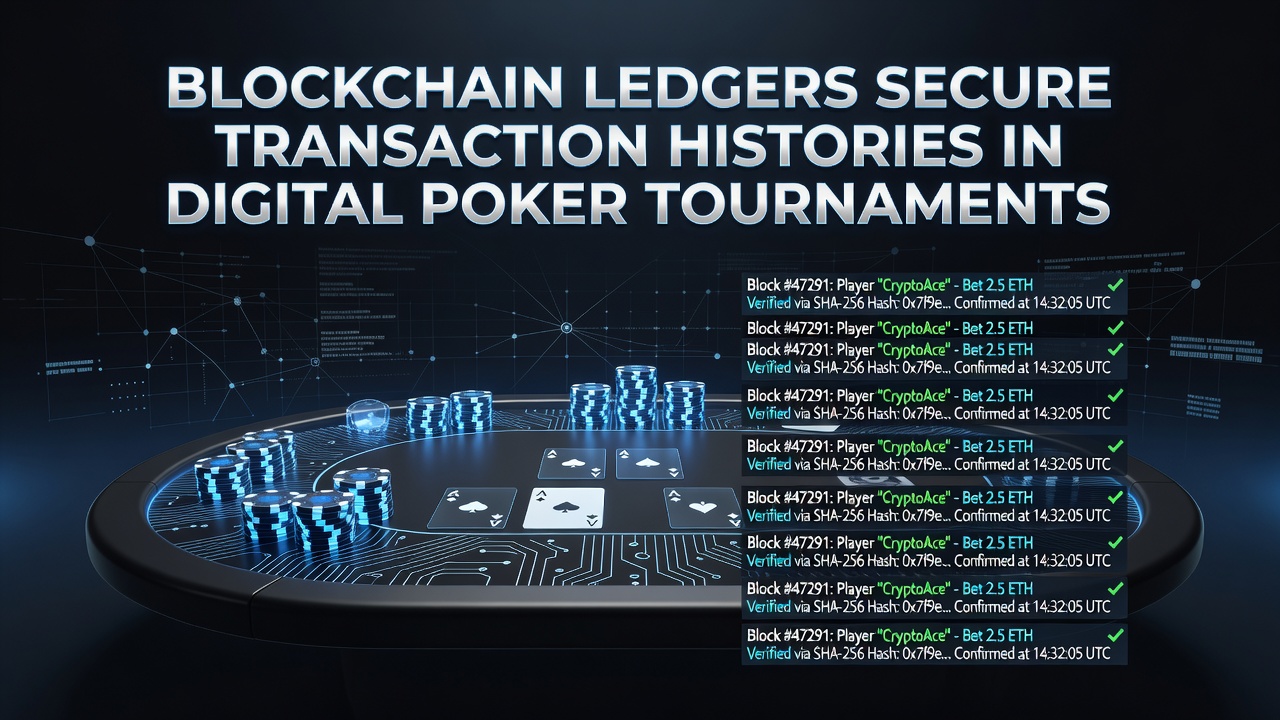
Distributed Ledger Systems Protect Transaction Records in Online Poker Tournaments
Digital poker tournaments rely on precise tracking of buy-ins, rebuys, prize distributions and player balances throughout each event cycle, and blockchain ledgers provide an immutable record of every transfer from the moment registration opens until final payouts settle. Operators integrate these systems by anchoring each transaction to a distributed network where multiple nodes validate entries before they become permanent, which eliminates single points of failure that once allowed disputes over missing funds or altered histories.
How Transaction Histories Form on the Chain
Every time a player deposits chips or enters a tournament, the platform records the action as a hashed block containing timestamp, wallet address, amount and tournament identifier, then broadcasts it for consensus among participating validators. Once confirmed, that block links to the previous one through cryptographic pointers, creating a continuous chain that cannot be rewritten without detection by the entire network. Observers note that this structure allows auditors to trace any player's complete activity from initial deposit through multiple tournament stages without needing to request data from a central server that might have experienced downtime or corruption.
Key Components in Tournament Applications
- Smart contracts that automatically release prize pools once predefined conditions such as final table completion are met
- Multi-signature wallets requiring approval from both operator and independent escrow nodes before large transfers occur
- Real-time synchronization across mobile apps and desktop clients so participants see identical balance updates regardless of device
Industry reports from the Canadian Gaming Association indicate that adoption of these ledger systems in poker platforms increased by 34 percent between 2024 and 2025, driven largely by operators seeking compliance with cross-border payment transparency rules. In July 2026 several European platforms completed integration upgrades that added zero-knowledge proofs, allowing verification of transaction validity without exposing individual player identities beyond regulatory requirements.
Verification Processes Used by Platforms
Platforms embed verification tools directly into tournament interfaces so players can query the public ledger themselves using transaction IDs generated at the time of each action. This capability reduces support ticket volume because users confirm their own histories rather than waiting for manual reviews. Data from university-led studies on distributed systems shows that reconciliation times for end-of-tournament reports dropped from an average of 48 hours to under 90 minutes once full blockchain anchoring became standard practice.

Regulatory bodies in Nevada and Australia have begun accepting blockchain-derived reports as primary evidence during compliance audits, provided the networks meet minimum node distribution and encryption standards. One study conducted by researchers at the University of Malta examined 12 major poker sites and found that those using ledger technology experienced 72 percent fewer chargeback disputes compared with traditional database setups over an 18-month observation window.
Security Advantages During High-Volume Events
During major series that attract thousands of simultaneous entries, transaction spikes can overwhelm conventional servers yet distributed ledgers handle the load through parallel validation across global nodes. Each confirmed block carries its own proof-of-work or proof-of-stake signature, making retroactive alterations computationally prohibitive even if a single operator node were compromised. Those who have reviewed breach reports from earlier centralized systems note that the absence of a master database removed the target that previously attracted coordinated attacks during peak tournament hours.
External links to detailed technical specifications appear in operator documentation, including guidance published by the Nevada Gaming Control Board on acceptable ledger architectures and a 2025 research paper from the University of Malta analyzing settlement latency across multiple poker implementations.
Conclusion
Blockchain ledgers continue to expand their footprint in digital poker by supplying verifiable, tamper-resistant records of every financial movement within tournaments. As more jurisdictions recognize these records for regulatory purposes and platforms refine integration methods, transaction histories become both more transparent to participants and more efficient for operators to manage. The pattern established through 2026 integrations suggests further refinements in privacy-preserving verification will follow as network capacity grows.