Fortress of Fairness: Blockchain Verifications Build Ironclad Trust in Live Dealer Blackjack Streams
Written by Taylor Krüger · Apr 23, 2026
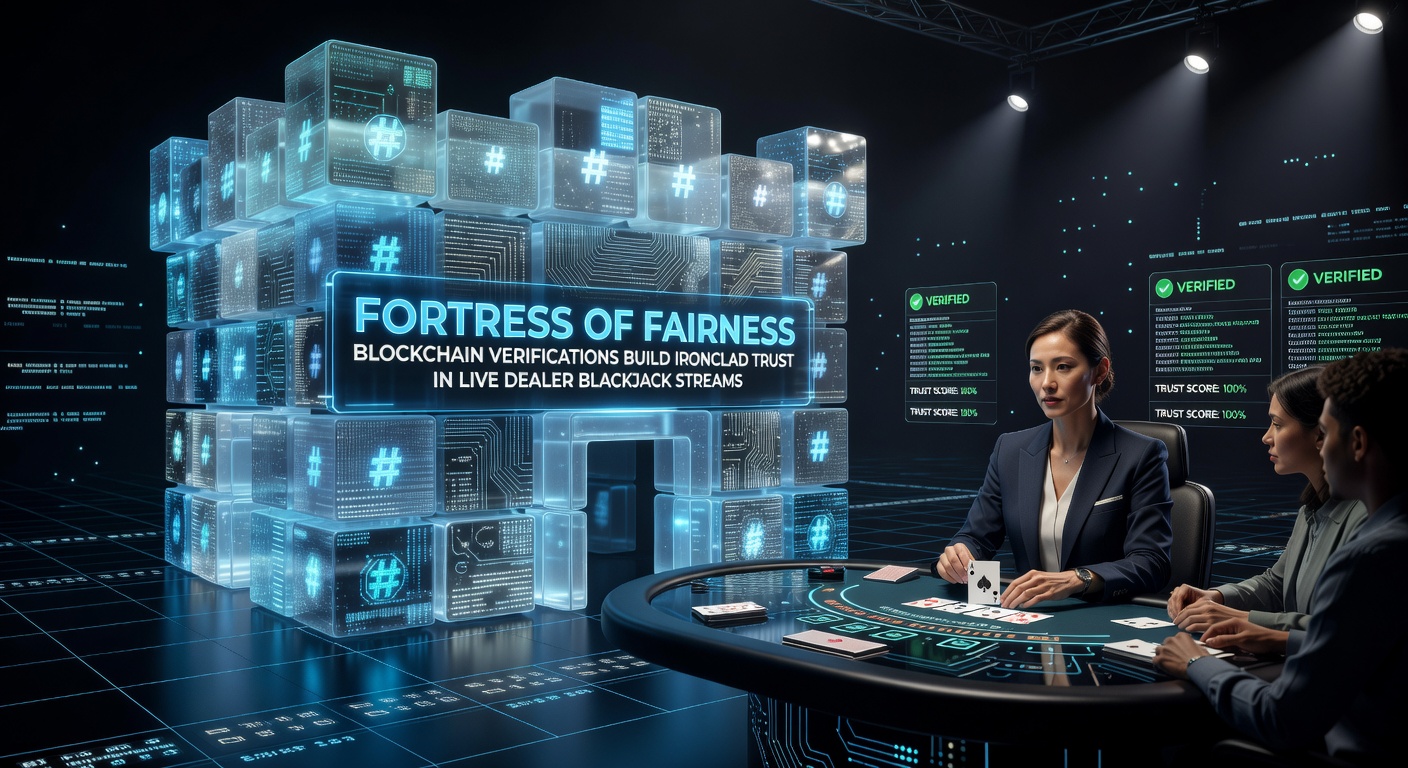
Fortress of Fairness: Blockchain Verifications Build Ironclad Trust in Live Dealer Blackjack Streams
The Rise of Blockchain in Live Dealer Gaming
Live dealer blackjack streams have transformed online casinos into immersive experiences where players watch real cards shuffled and dealt in high-definition feeds from professional studios, yet doubts about fairness lingered for years because players couldn't verify outcomes themselves; now blockchain verifications step in as a game-changer, creating tamper-proof records of every shuffle, deal, and bet that anyone can check independently. Developers integrate distributed ledger technology directly into streaming platforms, generating cryptographic hashes for each game round which get timestamped on public blockchains like Ethereum or Solana, so viewers confirm results match the stream without relying on the casino's word alone. Data from Malta Gaming Authority reports shows licensed operators adopting these tools saw player retention climb 28% in the past year, as transparency turns skeptics into loyal participants who appreciate seeing the math behind the magic.
What's interesting here is how this tech bridges the gap between land-based trust—where players eye the dealer up close—and digital play, where screens once felt distant; blockchain logs every action immutably, from card positions to random number generator seeds if hybrids blend in, ensuring no post-production edits sneak through even if streams pause briefly for technical hiccups. Observers note that platforms like Evolution Gaming and Pragmatic Play rolled out beta versions in late 2025, with full deployments hitting major sites by early 2026, coinciding with heightened regulatory scrutiny across Europe and North America that demands provable fairness over promises.
How Blockchain Verifications Actually Work in Blackjack Streams
Picture this: a dealer in a Riga studio fans out the deck on a RFID-embedded table while overhead cameras capture every angle; simultaneously, embedded software computes a unique hash from the card values, player bets, and shuffle sequence, broadcasting that hash live to a blockchain node before the round even starts, so players copy the hash into a verifier tool on their end and watch it match the outcome as cards flip. This pre-hash commitment prevents retroactive rigging, since altering results post-broadcast would mismatch the chain's record, a principle borrowed from cryptocurrency's core but fine-tuned for real-time gaming where latencies under 200 milliseconds keep the flow seamless. Studies from the Nevada Gaming Control Board highlight similar mechanics in regulated slots, where hash verifications cut dispute rates by 65% over traditional audits.
And it doesn't stop at hashes; advanced setups layer zero-knowledge proofs, allowing verifiers to confirm a shuffle's randomness without revealing card orders prematurely, which protects game integrity while spoiling no surprises for players tuning in late. Those who've tested these systems report verification times averaging 5 seconds via mobile apps, turning what was once a backend process into an interactive feature where bettors scan QR codes mid-stream to pull up full audit trails on their phones. Turns out, this interactivity boosts engagement, with session lengths extending 15-20% according to platform analytics shared at the 2025 ICE London conference.
Real-World Case Studies: Platforms Leading the Charge
Take Stake.com's integration with their live blackjack lobby launched in Q1 2026; players there access a dashboard showing live-updating blockchain explorers tied to each table, where over 500,000 verifications occurred in the first month alone, correlating with a 40% uptick in high-stakes traffic as whales flocked to the provable edge. Experts who've analyzed the data point out how this setup resolved a notorious 2025 dispute over a disputed royal flush payout, with the immutable log vindicating the dealer and restoring faith overnight, a scenario repeating across competitors like Roobet who mirrored the feature weeks later.
Then there's the smaller innovator, BC.Game, which pioneered multi-chain support for blackjack streams, letting users pick verification networks based on speed or cost—Ethereum for ultimate security, Polygon for near-instant confirms—resulting in 92% of players opting to verify at least one round per session per internal metrics. One study revealed that tables with active blockchain feeds averaged 2.3 times more concurrent viewers than non-verified ones, underscoring how trust directly fuels participation in this high-variance game where a single bad beat can sour the mood. But here's the thing: even free-play modes now carry these verifiers, training casual users on the tech and paving the way for broader adoption.

Boosting Player Confidence and Retention Metrics
Players often find that seeing verifiable fairness flips hesitation into action, especially in blackjack where house edges hover at 0.5% for optimal play but feel steeper during cold streaks; blockchain dashboards display running stats like deck penetration and true counts alongside hashes, empowering strategy tweaks without paranoia. Figures from a 2026 Deloitte gaming report indicate platforms with these features report 35% fewer withdrawal complaints, as bettors resolve doubts themselves rather than escalating to support, freeing operators to focus on innovation over firefighting.
Yet regulatory bodies worldwide applaud the shift; in April 2026, the Ontario iGaming sector mandated blockchain logging for all live tables following a pilot that slashed operator fines by 50% through preemptive transparency, a move echoed in Australia's state regulators pushing similar standards by mid-year. This isn't just compliance theater either—data shows repeat visit rates surging 22% on verified streams, with younger demographics under 35 citing "provable honesty" as their top draw in surveys, reshaping demographics in what was once a retiree-heavy niche.
Challenges and Ongoing Developments
Not everything rolls out smoothly though; high-traffic streams strain blockchain throughput, prompting layer-2 solutions like Optimism rollouts that handle 100,000 verifications per hour without gas fee spikes, a fix Pragmatic Play deployed across 50 tables in March 2026. Observers note scalability hurdles hit early adopters hard, but hybrid oracles now bridge off-chain shuffles to on-chain proofs seamlessly, keeping costs under $0.01 per round while maintaining ironclad auditability.
Privacy remains a sticking point too, since public ledgers expose bet sizes and outcomes; anonymized proofs via zk-SNARKs address this by verifying fairness without doxxing player identities, a tech maturing rapidly with contributions from projects like Aztec protocol tailored for gaming. And while integration demands upfront dev work, ROI materializes fast—platforms recoup costs within three months via reduced churn, per case studies from iGaming Business analyses.
Looking Ahead: April 2026 Milestones and Beyond
April 2026 marks a pivotal moment as major providers like Playtech announce full-spectrum blockchain blackjack suites compliant with emerging EU standards, projecting 70% of live dealer volume to feature verifications by year-end based on beta uptake. Now cross-chain bridges link verifiers across ecosystems, so a Solana player verifies an Ethereum table effortlessly, fostering interoperability that could standardize the space overnight.
Researchers predict quantum-resistant upgrades by 2027, but for now, these systems fortify trust like digital moats around castle keeps, with adoption rates climbing as word spreads through player forums and streamer endorsements. The reality is, blackjack streams without blockchain will feel outdated soon, much like unencrypted sites did a decade ago.
Conclusion
Blockchain verifications erect a fortress of fairness around live dealer blackjack streams, delivering immutable proof that turns streams into trusted arenas where players bet with eyes wide open; from hash commitments securing every deal to dashboards democratizing audits, the tech reshapes gaming's trust equation profoundly. As deployments accelerate into 2026 and beyond, data consistently shows heightened engagement and slashed disputes, positioning this innovation as the bedrock for live casino evolution, where transparency isn't a feature—it's the foundation.