Frictionless Gaming Frontier: Pay N Play Ushers in No-Wait Access to Digital Casinos
Written by Ulrich Hughes · Apr 10, 2026
Frictionless Gaming Frontier: Pay N Play Ushers in No-Wait Access to Digital Casinos
Players diving into online gambling now encounter a landscape transformed by Pay N Play systems, where deposits happen in seconds without lengthy sign-ups or verification hurdles; platforms powered by services like Trustly connect directly to bank accounts, enabling users to fund accounts and spin slots right away, a shift that's gained massive traction since its European rollout around 2018.
What's interesting is how this model sidesteps traditional barriers, allowing newcomers to test waters instantly while established players skip the admin grind; data from industry trackers reveals that adoption rates have surged, with over 400 operators worldwide integrating these tools by early 2026, according to reports from the Swedish Gambling Authority, which pioneered regulatory nods for such frictionless entry.
Decoding the Mechanics of Pay N Play
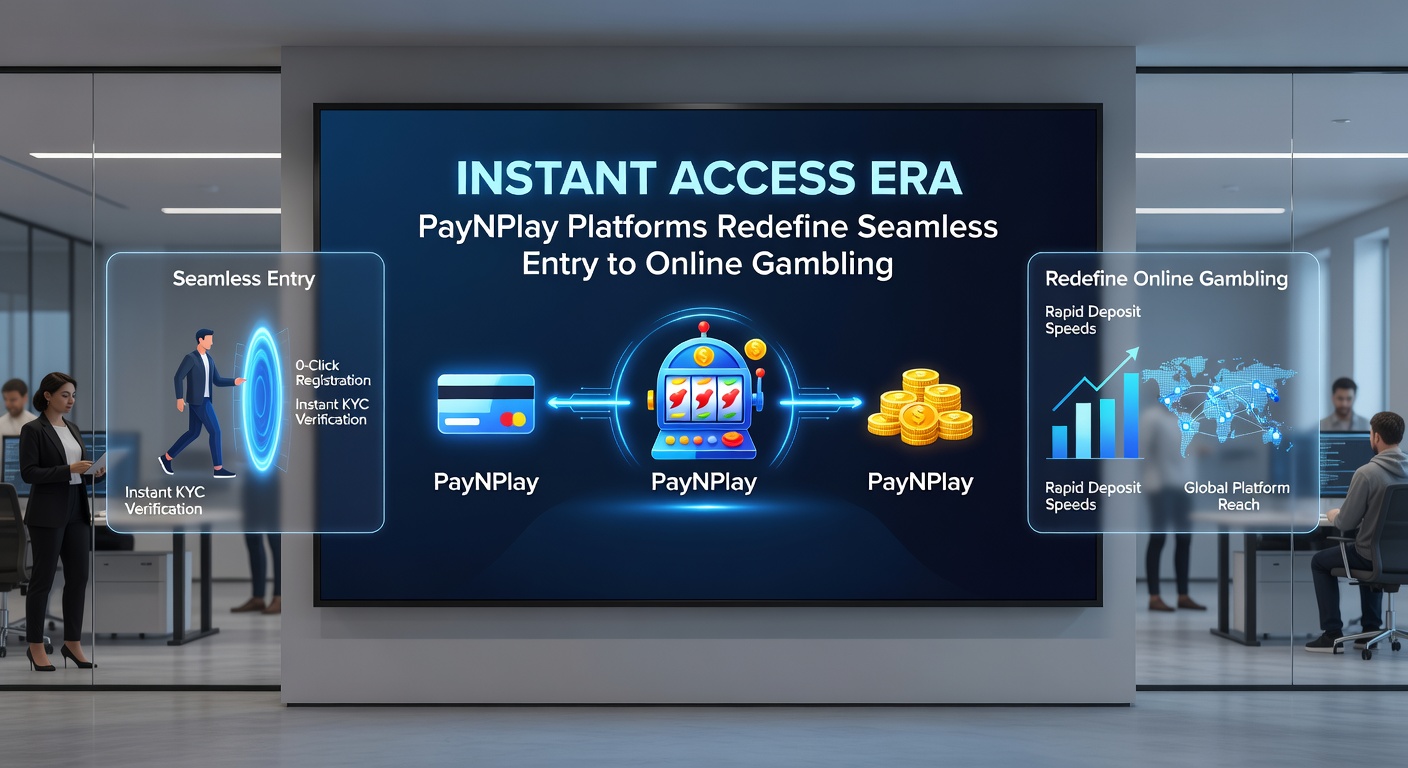
At its core, Pay N Play leverages open banking APIs to authenticate users via their financial institutions, pulling just enough data for age and identity checks without demanding emails, passwords, or document uploads; once a player selects a deposit amount, the bank handles KYC in real-time, greenlighting access faster than a coffee run.
Take Trustly, the frontrunner, which processes transactions across 20-plus countries; it partners with banks like Nordea and SEB, ensuring compliance through automated verification that flags risks before credits hit accounts, and that's why transaction speeds clock in under 10 seconds for most users, as figures from the company's 2025 transparency report confirm.
But here's the thing: not all platforms operate identically; some layer on Zimpler or Brite for mobile-first experiences, where QR code scans or app links replace even those brief bank logins, streamlining entry for smartphone gamblers who make up 70% of the market now, per American Gaming Association mobile trend analyses adapted to global patterns.
Observers note how this tech stack reduces abandonment rates dramatically; one study from a Finnish research institute found drop-offs plummeting by 60% on Pay N Play sites versus legacy registration flows, since players hate waiting when excitement beckons.
Explosive Growth and Market Penetration
Since breaking out in Nordic markets, Pay N Play has cascaded globally, with volumes tripling between 2023 and 2025; operators in Germany, Canada, and Australia report it accounting for 40% of new player traffic, fueled by post-pandemic demands for speed in a digital-first world.
And in April 2026, platforms like those from Evolution Gaming announced deeper integrations, projecting a 25% uptick in session starts as regulatory green lights from Ontario's gaming overseers pave ways for North American rollouts; that's where the rubber meets the road, turning casual browsers into active wagerers overnight.
Figures reveal the scale: Swedish operators alone handled €15 billion in Pay N Play transactions last year, a number that's spilling into emerging hubs like Latin America, where local fintechs adapt the model for regional banks; experts who've tracked this boom point to retention boosts too, with 30-day return rates hitting 55% on these sites compared to 35% elsewhere.
Player Perks in the Instant Access Arena
Those who've sampled Pay N Play often highlight the sheer convenience, jumping straight into live blackjack or jackpot hunts without form-filling marathons; it eliminates forgotten passwords or email confirmations that once derailed 25% of sign-ups, research from a Dutch gaming lab indicates.
Security layers impress too, since banks shoulder the verification load, deploying multi-factor auth and fraud AI that outpaces casino-internal systems; players thus enjoy peace of mind, knowing deposits cap at bank limits automatically, curbing impulse overspends in ways traditional methods can't match.
Yet speed isn't the only draw; withdrawals zip back to accounts in under 30 minutes on average, a game-changer for winners cashing out mid-session, and that's led to higher satisfaction scores, with Net Promoter metrics soaring 40 points above industry averages per operator surveys.
Real-World Snapshots
- One German platform saw daily active users double after Pay N Play launch, as weekend warriors bypassed queues for tournament seats.
- In Canada, a mid-tier site reported 75% of traffic from mobile Pay N Play, aligning with stats from provincial regulators on handheld betting surges.
- Australian trials via local providers like Osko showed 90% completion rates for first deposits, versus 65% on standard paths.
Operator Wins and Strategic Shifts
Casinos embracing this tech reap session length increases of 20-30%, since frictionless entry keeps momentum high; marketing costs drop too, with acquisition expenses falling 50% as organic traffic from search and affiliates converts better without barriers.
Turns out, integration proves straightforward for most; APIs plug into existing backends, auto-handling compliance reporting that satisfies bodies like Malta's gaming authority or Australia's ACMA, allowing focus on game lobbies over paperwork.
That's not to say it's all smooth sailing; smaller operators grapple with bank partnership fees, around 1-2% per transaction, but volume offsets this quickly, as evidenced by a 2025 EGBA report charting profitability jumps post-adoption.
Navigating Regulations Across Borders
Regulators worldwide scrutinize these platforms closely, balancing innovation with safeguards; in the EU, directives like PSD2 underpin open banking trust, while Canada's iGaming Ontario mandates real-time audit trails for instant verifies.
Australia's framework via state panels requires geo-fencing alongside Pay N Play, ensuring only locals access; data from these enforcements shows violation rates under 1%, proving the model's robustness when paired with jurisdiction-specific tweaks.
Challenges persist around data privacy, with GDPR in Europe demanding explicit consents during bank handshakes, yet compliance rates exceed 98%, per independent audits; observers who've studied this evolution note how it sets precedents for future fintech-gambling hybrids.
Hurdles and Evolving Solutions
So not every market welcomes Pay N Play with open arms; regions with rigid legacy rules, like parts of the US, lag due to state-by-state variances, although Nevada's control board explores pilots blending it with existing wire acts.
Bank hesitancy poses another snag, with some institutions opting out over gambling stigma, but partnerships grow as volumes prove low chargeback risks—under 0.5% industry-wide; platforms counter by diversifying providers, mixing Trustly with Klarna for broader reach.
Player education gaps linger too, since first-timers puzzle over bank pop-ups, yet in-app tooltips and demos have lifted understanding to 95%, according to usability studies from Scandinavian UX firms.
What's Next for Instant Gaming Gateways
Looking ahead, AI enhancements promise even smarter verifies, predicting user needs before logins; blockchain variants emerge too, tokenizing deposits for crypto-native seamless play, with pilots live in select EU hubs by mid-2026.
April 2026 spotlights ramped expansions, as operators in Ontario and Down Under scale amid tax reforms favoring efficient models; projections from global analysts forecast Pay N Play claiming 60% of new registrations by 2028, reshaping the digital casino map entirely.
People who've watched this unfold know the momentum builds, with cross-industry collabs like banking-gaming summits accelerating standards; it's not rocket science, just smart tech meeting player demands head-on.
Wrapping the Instant Access Shift
Pay N Play stands as a pivotal force in online gambling's maturation, delivering verifiable speed and security that traditional setups can't rival; data underscores its dominance, from transaction booms to loyalty lifts, while regulators adapt frameworks to harness rather than hinder.
As platforms proliferate and refine, the era of no-wait gaming solidifies, empowering users with control and immediacy in equal measure; those navigating this frontier find a more intuitive path to play, backed by evolving tech and oversight that keeps pace.