Machine Learning's Expanding Role in Uncovering Irregular Betting Patterns Across Sports Platforms
Written by Cameron Neumann · Aug 6, 2026
Machine Learning's Expanding Role in Uncovering Irregular Betting Patterns Across Sports Platforms
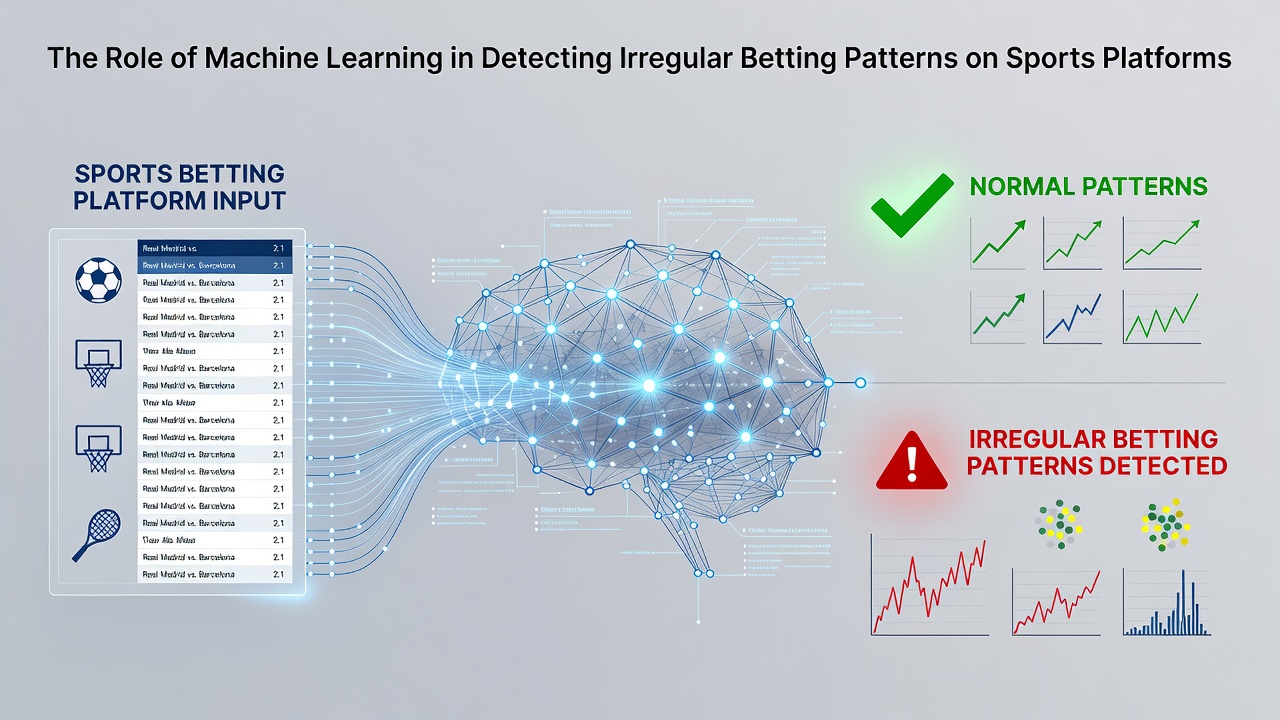
Modern sports betting platforms generate enormous volumes of transaction data every second, and machine learning systems now sit at the center of efforts to flag irregular activity before it escalates. These algorithms examine historical wagers, live odds movements, and user behavior simultaneously, creating profiles that highlight deviations from established norms. Research indicates that supervised models trained on labeled datasets of past manipulations achieve detection rates above 85 percent in controlled tests, while unsupervised approaches surface previously unknown clusters of coordinated betting.
Core Techniques Driving Detection
Supervised classification models such as random forests and gradient boosting trees receive features that include stake size relative to account history, timing of bets around major events, and geographic origin of wagers. Researchers discovered that adding network analysis variables, such as shared device fingerprints or linked payment methods, improves accuracy because many irregular patterns involve groups rather than isolated users. Unsupervised methods like isolation forests and autoencoders, meanwhile, operate without prior labels and flag outliers in real time, which proves valuable when new manipulation tactics appear.
Deep learning architectures, particularly recurrent neural networks and transformers, capture sequential dependencies in betting streams. A model might notice that a sudden series of large bets on underdog outcomes follows a specific sequence of account creations across multiple jurisdictions, a signal that simpler statistical thresholds would miss. Platforms integrate these models into streaming pipelines so that alerts reach compliance teams within seconds of the triggering wager.
Real-World Implementation Patterns
Take one major European operator that deployed a hybrid system combining graph neural networks with traditional rule engines in early 2025. The approach reduced false positives by 40 percent compared with the previous rule-only setup, according to internal metrics shared with regulators. In North America, several state-licensed sportsbooks adopted similar frameworks after guidance from the American Gaming Association encouraged data-driven monitoring. Australian operators, facing stricter reporting under federal interactive gambling legislation, have likewise incorporated anomaly detection layers that cross-reference bets against official league statistics feeds.

During August 2026, industry conferences highlighted new federated learning pilots that allow platforms to train shared models without exchanging raw user data. This development addresses privacy concerns while expanding the pool of training examples across borders. Observers note that federated setups have already demonstrated measurable gains in identifying money-laundering typologies that span multiple operators.
Challenges and Limitations
Adversarial actors continuously adapt their methods, which means models require frequent retraining on fresh data. Concept drift occurs when betting behaviors shift because of changes in league schedules, new product offerings, or evolving regulatory environments. Platforms therefore maintain continuous validation loops that compare model predictions against subsequent investigation outcomes. Data quality remains another constraint, since incomplete records from certain markets reduce the reliability of cross-border comparisons.
Explainability requirements imposed by some regulators further complicate deployment. Black-box deep learning outputs must be translated into human-readable reasons for alerts, prompting many operators to combine interpretable models such as decision trees with more powerful neural networks. The resulting hybrid systems deliver both high detection performance and the audit trails demanded by oversight bodies.
Future Directions
Integration with biometric verification and device fingerprinting continues to tighten, allowing platforms to link seemingly unrelated accounts with greater precision. Reinforcement learning experiments are underway to optimize alert thresholds dynamically, balancing the cost of missed irregularities against the operational burden of excessive reviews. Academic teams at several universities have begun publishing open datasets of synthetic betting sequences, which accelerates collaborative model development while protecting actual user information.
Conclusion
Machine learning now forms an essential layer of defense for sports betting integrity, processing data volumes and pattern complexities that exceed human capacity. Continued refinement of algorithms, combined with cross-industry data-sharing initiatives and stronger regulatory frameworks outside the UK, points toward steadily improving detection capabilities through 2026 and beyond. Platforms that invest in these technologies gain both compliance advantages and operational efficiencies as irregular activity becomes harder to conceal.