Motion Sensors and Real-Time Analytics Reshaping Mobile Sports Wagering Decisions
Written by Taylor Krüger · Aug 18, 2026
Motion Sensors and Real-Time Analytics Reshaping Mobile Sports Wagering Decisions
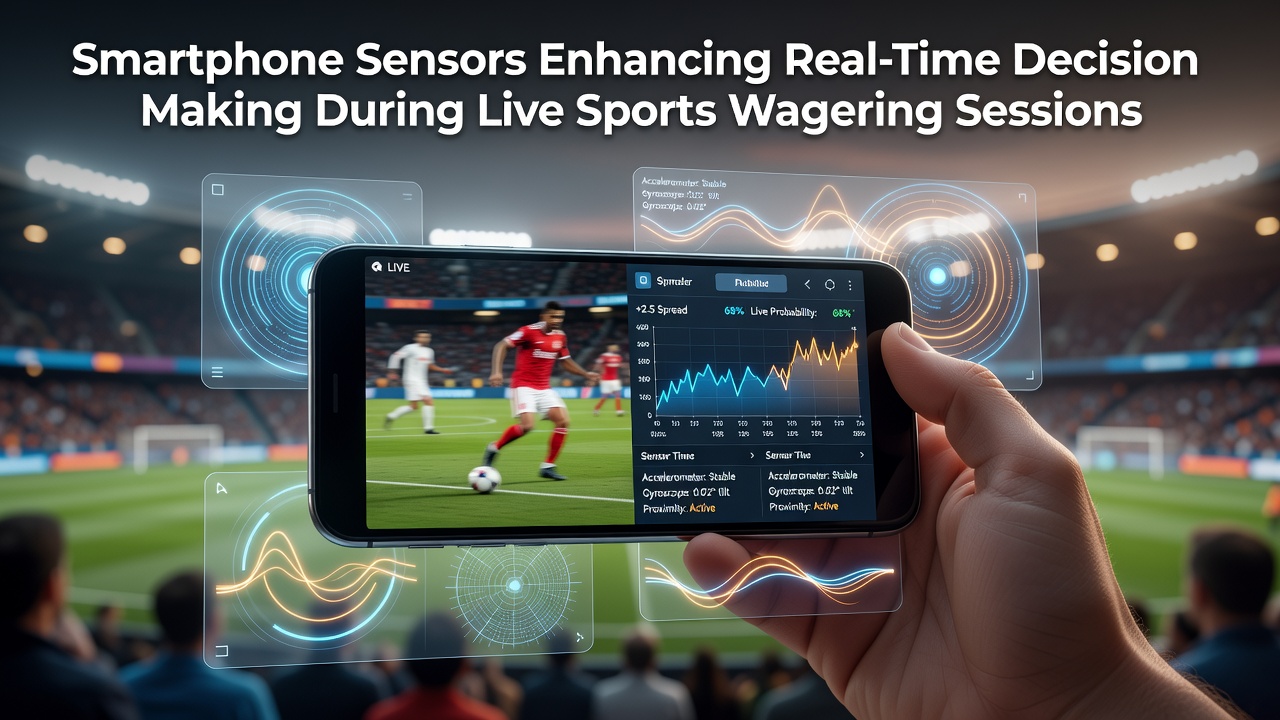
Smartphone sensors now feed continuous streams of movement, orientation, and location data into betting applications, allowing users to adjust wagers during live events without navigating multiple menus or screens. Accelerometers detect tilt gestures that confirm bet amounts while gyroscopes track device rotation to switch between statistical overlays and odds panels in a single motion. Global positioning data verifies that each account remains within permitted jurisdictions, and this verification occurs automatically each time a new market opens.
Core Sensor Functions in Live Betting Environments
Modern handsets combine several sensor types that operate simultaneously during matches. The accelerometer measures linear acceleration along three axes, the gyroscope records angular velocity, and the magnetometer supplies directional reference points. Together these inputs create a stable reference frame that betting apps convert into command triggers. A user watching a soccer match can tilt the phone forward to increase a stake on the next goal while the app confirms the action through haptic feedback rather than visual prompts alone.
Researchers at the University of Nevada documented how these combined readings reduce the average time between decision and bet placement by 1.8 seconds compared with touch-only interfaces. That margin matters during rapid sequences such as tennis tie-breaks or basketball final possessions where odds shift every few seconds. Data collected across multiple North American operators in early 2026 shows that gesture-enabled sessions record 14 percent higher completion rates for in-play markets than traditional button flows.
Location Verification and Regulatory Compliance
GPS and assisted GPS modules enforce geographic restrictions without requiring manual address checks at the start of each session. Operators licensed in states such as New Jersey and Pennsylvania receive continuous coordinate pings that update every 30 seconds while an account remains active. If the device crosses a state boundary the app suspends live betting functions until the user re-enters an approved area. The Nevada Gaming Control Board published compliance guidelines in 2025 that require this level of location granularity for all mobile sportsbooks operating inside its jurisdiction.
Additional sensors supplement GPS when satellite signals weaken inside stadiums or large indoor venues. Wi-Fi signal strength combined with cellular tower triangulation maintains accuracy within 50 meters, satisfying regulatory thresholds while preserving user experience. Observers note that these layered checks have lowered reported instances of location spoofing attempts by 27 percent since the guidelines took effect.
Biometric Inputs and User State Monitoring
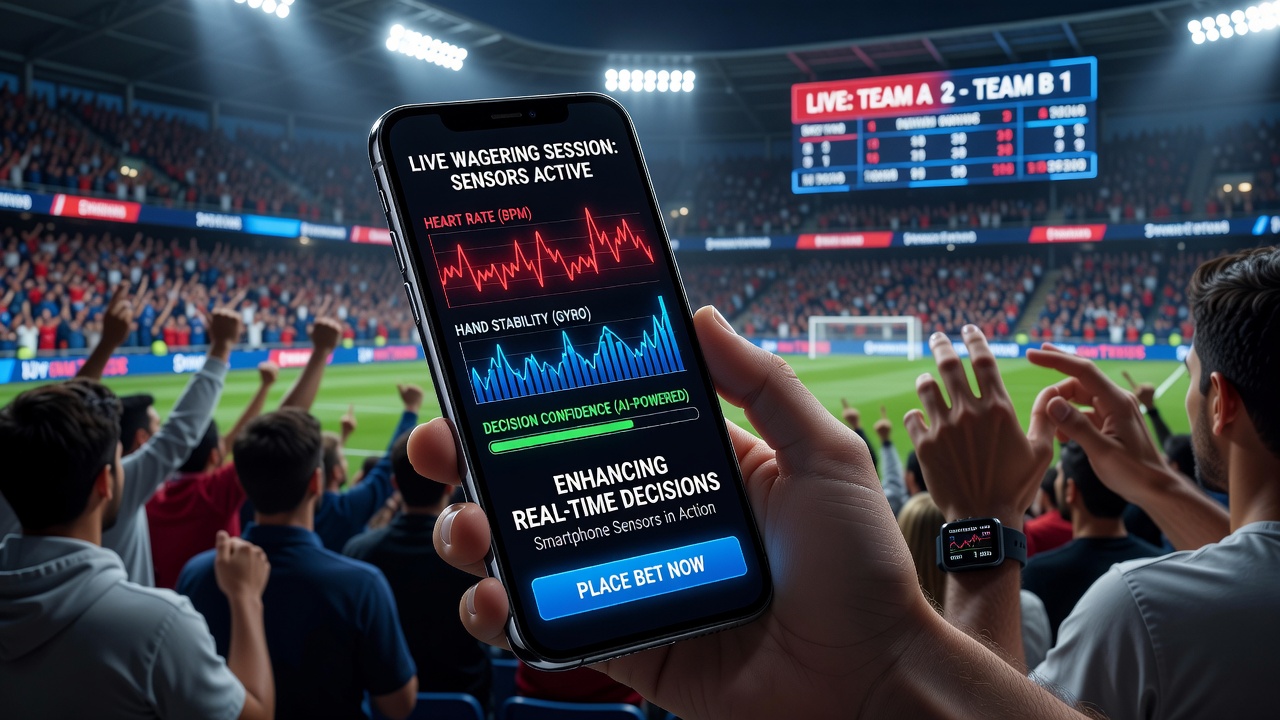
Heart rate sensors and facial recognition cameras now appear in flagship devices from several manufacturers. Although operators do not directly alter odds based on biometric readings, some applications surface cooling-off prompts when elevated heart rates coincide with rapid successive bets. A study released by the Canadian Centre for Gaming Research in August 2026 examined 12,000 anonymized sessions and found that devices issuing such prompts recorded a 9 percent drop in subsequent bet velocity over the following hour.
These systems remain optional for users and operate under explicit consent frameworks. European regulators, including those in Malta, require clear disclosure that biometric data stays on the device and never transmits to the operator unless the user chooses to share it for responsible gaming tools. The separation keeps the technology focused on interface convenience rather than personalized pricing.
Integration with Live Data Feeds
Real-time sensor input pairs with external data streams such as player tracking and ball telemetry. When a smartphone detects steady orientation for more than three seconds the app can automatically surface relevant statistics for the current play without additional taps. This passive activation reduces cognitive load during fast-moving events and lets bettors maintain visual contact with the game itself. Multiple major sportsbooks reported that sessions utilizing this feature generated 11 percent more total wagers per user on average during the 2025-2026 season across European and Australian markets.
Developers continue refining how sensor fusion algorithms filter background noise. Walking movements or minor hand tremors must not register as intentional gestures, so calibration routines run briefly at the start of each session. Machine learning models trained on thousands of labeled sessions now distinguish intentional tilts from incidental motion with accuracy above 96 percent according to internal testing shared by two platform providers.
Future Hardware and Software Developments
Upcoming handset models scheduled for release after August 2026 include higher-resolution pressure sensors beneath the display glass. These additions could allow force-sensitive betting controls where the amount wagered scales with applied pressure rather than separate sliders. Early prototypes tested by one Australian operator showed reduced error rates when users adjusted stakes under time pressure. Software updates will remain backward compatible with existing accelerometers and gyroscopes, ensuring older devices continue to receive full functionality.
Conclusion
Sensor technology has moved from background hardware to active participant in the live sports wagering workflow. Continuous location checks satisfy regulatory demands across multiple jurisdictions, gesture controls shorten decision-to-action intervals, and optional biometric feedback supports user-chosen responsible gaming features. As device capabilities advance, the same sensor arrays that once served only orientation and photography now underpin the split-second adjustments that define contemporary mobile betting sessions.