Smartphone Proliferation Reshapes Online Poker Tournament Designs Worldwide
Written by Mia Walter · Aug 2, 2026

Smartphone Proliferation Reshapes Online Poker Tournament Designs Worldwide
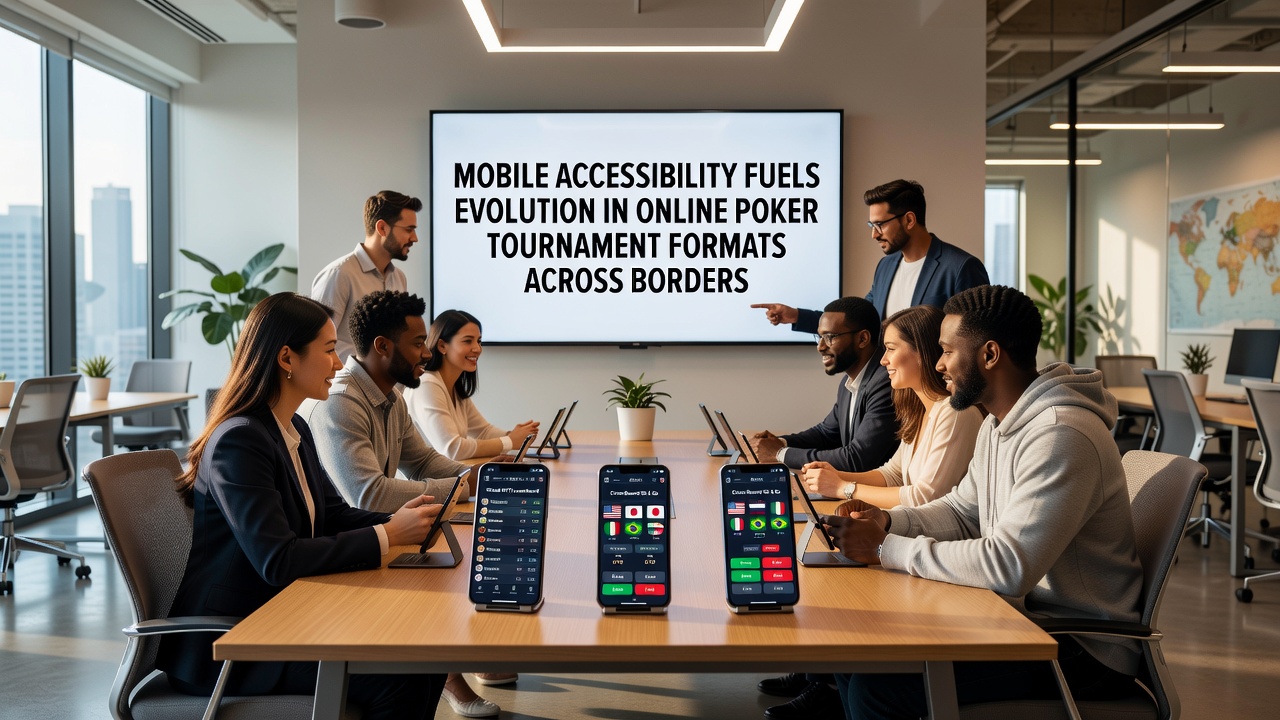
Data from international gaming reports shows mobile accessibility has prompted operators to adjust tournament structures so that shorter blind levels, simplified interfaces, and cross-device synchronization meet players connecting from varied regions, while regulatory frameworks in North America, Europe, and Asia continue to influence how these events operate across borders.
Observers note that since 2023 several platforms have introduced mobile-first tournament schedules that compress traditional multi-hour events into 90-minute windows, allowing participants in different time zones to complete matches without extended commitments, and figures from the European Gaming and Betting Association indicate participation in such abbreviated formats rose by 28 percent in the first half of 2025.
Format Adjustments Driven by Device Limitations
Engineers at major poker networks have reduced the number of betting rounds per level and introduced auto-fold options that function reliably on smaller screens, because touch accuracy and connection stability vary widely when users switch between 5G networks and public Wi-Fi; research compiled by the University of Nevada Reno Gaming Innovation Program reveals these changes lowered average session drop-off rates by 17 percent among mobile users compared with desktop counterparts during 2024 trials.
Platforms now offer satellite qualifiers that feed directly into larger international events, yet the entry points remain capped at lower buy-ins to accommodate casual participants who join via smartphones during commutes or short breaks, and statistics released by the Canadian Centre for Gaming Research show mobile satellite entries accounted for 41 percent of total qualifiers in Canadian-facing tournaments by July 2025.
Cross-Border Regulatory Influences on Scheduling
Operators must align tournament start times with licensing requirements that differ by jurisdiction, so many sites now stagger daily events across morning, afternoon, and evening slots that correspond to peak mobile usage periods in the United States, Australia, and Southeast Asia; according to data published by the Australian Communications and Media Authority, mobile poker traffic peaks between 7 pm and 11 pm local time, prompting several networks to launch Asia-Pacific friendly series that begin at 8 pm AEST.
Yet compliance with anti-money laundering rules in multiple countries requires identity verification steps that integrate seamlessly into mobile apps, and providers have adopted biometric checkpoints that complete within seconds rather than forcing players to pause mid-tournament; one case documented by the International Centre for Sport Security found that streamlined verification reduced abandoned registrations by 22 percent across tested European and Latin American markets in early 2026.
Emerging Tournament Variants and Player Behavior
Hybrid formats that combine freeze-out and re-entry elements have gained traction because mobile players often prefer the flexibility to rejoin after brief interruptions, while data collected by the Poker Players Alliance indicates re-entry mobile tournaments experienced a 33 percent increase in repeat entries between August 2025 and August 2026 compared with traditional single-entry events.
Push notifications now alert registered participants minutes before late-registration windows close, reducing missed opportunities that once occurred when users switched apps, and industry reports from the Asia-Pacific Gaming Council note that notification-driven late entries rose to 19 percent of total field sizes in regional series during the first quarter of 2026.
Deal-making features integrated into mobile clients allow remaining players to negotiate payouts without leaving the application, which suits shorter attention spans observed in smartphone sessions; a study issued by the University of Macau Gaming Research Centre found that 64 percent of mobile tournament participants accepted deals when offered, versus 47 percent on desktop platforms during matched sample periods.
Technical Infrastructure Supporting Broader Access
Cloud-based servers now distribute tournament data across regional nodes so that latency stays low even when participants connect from distant locations, and this infrastructure supports simultaneous play in events that draw entrants from over 40 countries; figures shared by the Global Lottery and Gambling Association indicate average ping times for mobile poker clients dropped below 45 milliseconds in tested markets by mid-2026.
Payment integrations that accept local currencies and mobile wallets further lower barriers for international entrants, allowing buy-ins without currency conversion delays, while operators report that multi-currency mobile tournaments expanded their average field sizes by 24 percent year-over-year in 2025 according to aggregated platform metrics.
Conclusion
Evidence gathered across regulatory filings, academic studies, and industry metrics demonstrates that mobile accessibility continues to prompt measurable changes in how online poker tournaments are structured, scheduled, and delivered across national boundaries, with operators adapting formats to device constraints and regional usage patterns while maintaining compliance with diverse legal frameworks.